What is the difference between a camcorder and a video camera?
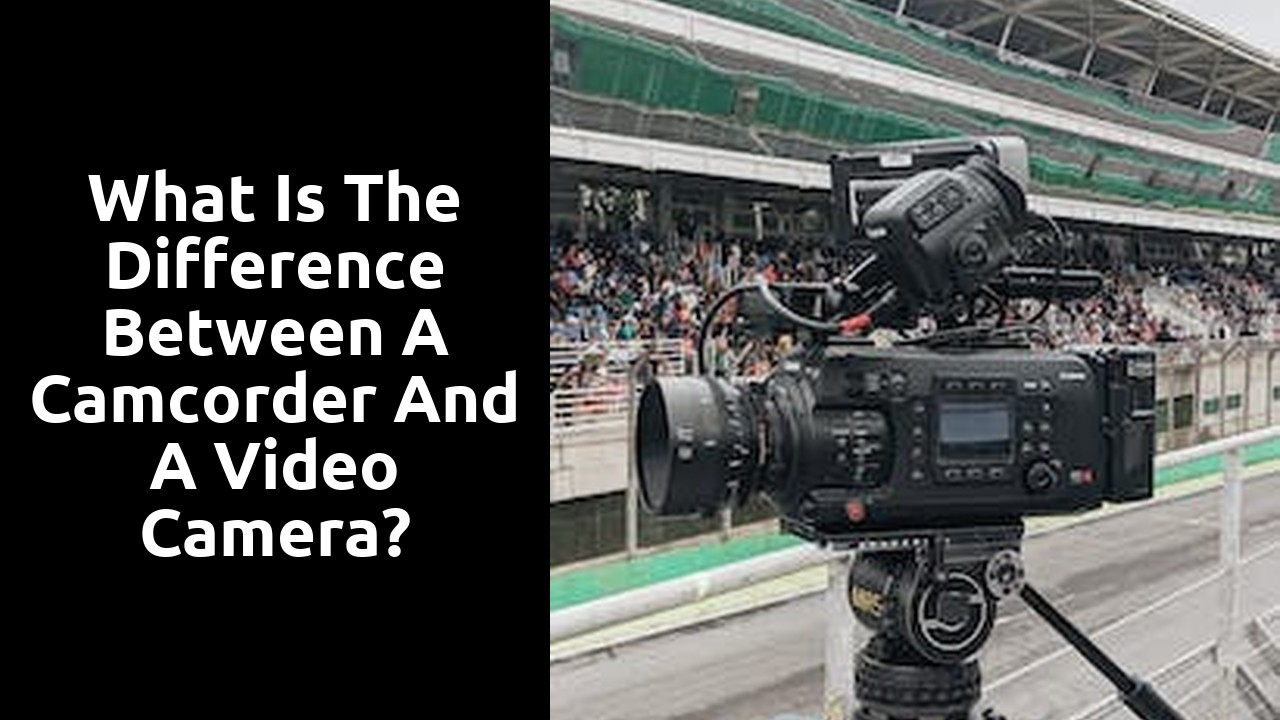
Defining a Camcorder and a Video Camera
A camcorder and a video camera are two devices that are often used interchangeably, but there are some key differences between the two. A camcorder is a portable electronic device that combines a camera and a video recorder into one unit. It is designed specifically for capturing and recording video footage, with built-in features such as a lens, a sensor, and audio recording capabilities.
On the other hand, a video camera refers to any type of camera that is used to capture moving images. It can include various types of cameras, such as professional cinema cameras, digital SLR cameras, or even smartphones with video recording capabilities. Unlike a camcorder, a video camera may not have dedicated features for audio recording and may require additional equipment for capturing sound. The main purpose of a video camera is to capture high-quality video footage, which can be used for various purposes such as filmmaking, broadcasting, or personal use.
The Evolution of Camcorders and Video Cameras
Camcorders and video cameras have come a long way since their inception. In the early days, these devices were bulky, heavy, and expensive, making them inaccessible to the average consumer. However, with advancements in technology, camcorders and video cameras have become smaller, lighter, and more affordable. This evolution has allowed for greater ease of use and portability, making it possible for anyone to capture high-quality videos.
One significant development in the evolution of camcorders and video cameras is the shift from analog to digital formats. Analog camcorders used magnetic tape to record videos, which required extra steps for playback and editing. With the introduction of digital technology, video cameras now store footage in digital formats such as discs and memory cards. This change not only improved the convenience of recording and storing videos but also enhanced the overall quality. Digital formats enable higher video resolutions and better color reproduction, ensuring a more satisfying viewing experience.
Image Quality: Resolutions and Sensors
Camcorders and video cameras have come a long way in terms of image quality, thanks to advancements in resolutions and sensors. Resolutions refer to the number of pixels that make up an image or video. The higher the resolution, the more detailed and crisp the footage will appear. In the past, camcorders and video cameras had limited resolution options, usually ranging from standard definition to high definition. However, with the rapid development of technology, we now have access to ultra-high definition (UHD) and even 8K resolutions, which offer an unprecedented level of clarity.
The sensor in a camera is responsible for capturing light and converting it into an electrical signal, which is then processed to create an image or video. The size and quality of the sensor play a crucial role in determining the overall image quality. Larger sensors tend to gather more light, resulting in improved low-light performance and better dynamic range. Additionally, sensors with higher megapixel counts can capture finer details and provide greater flexibility for cropping and editing. While smaller sensors may be suitable for everyday use, professional videographers often opt for larger sensor sizes to achieve superior image quality.
Lens Options: Zoom, Aperture, and Focal Length
When it comes to capturing the perfect shot, lens options play a crucial role in the performance of camcorders and video cameras. Zoom, aperture, and focal length are three important factors that determine the versatility and quality of the captured images and videos.
Zoom refers to the ability of the lens to bring distant objects closer, allowing for greater detail and flexibility in composition. With a zoom lens, users can seamlessly transition between wide-angle shots to capture sweeping landscapes, and telephoto shots for close-ups of distant subjects. The range of zoom can vary from camera to camera, offering different levels of magnification and creative control.
Aperture, on the other hand, controls the amount of light that enters the lens. It affects the exposure of the image as well as the depth of field. A wider aperture (smaller f-number) allows more light to pass through, resulting in brighter images and a shallow depth of field with a blurred background. Conversely, a narrower aperture (larger f-number) restricts the amount of light, resulting in darker images but with a greater depth of field in focus.
Focal length determines the field of view and magnification of the lens. It is measured in millimeters and indicates the distance from the lens to the image sensor when the subject is in focus. Shorter focal length lenses provide a wider field of view, capturing more of the scene, while longer focal length lenses offer a narrower field of view but can magnify distant subjects. The choice of focal length depends on the desired perspective and the type of shooting, whether it's landscapes, portraits, or sports photography.
Overall, understanding lens options such as zoom, aperture, and focal length is crucial for capturing stunning visuals and achieving the desired creative effects. It allows photographers and videographers to explore different perspectives, control exposure, and bring their artistic vision to life.
Recording Formats: Tapes, Discs, and Memory Cards
Tapes, discs, and memory cards have been the primary recording formats for camcorders and video cameras for many years. Each of these formats has its own advantages and disadvantages.
Tapes, such as MiniDV and Hi8, have long been a popular choice due to their durability and low cost. They offer a high storage capacity, allowing you to record hours of footage without the need to swap tapes frequently. However, tapes require physical handling and can degrade over time, resulting in a loss of image and sound quality.
Discs, notably DVDs, offer a convenient way to record and distribute videos. They are easy to use and provide a reliable storage medium. With the popularity of DVD players, it's also simple to share your recordings with others. However, discs have limited storage capacity and can be prone to scratches, which may affect the quality of the recorded content.
Memory cards, such as SD cards, have become increasingly popular in recent years. They are compact, lightweight, and offer high storage capacities. Memory cards are also easy to transfer and back up, as they can be connected directly to computers or other devices. However, their small size can make them prone to loss or damage, and they can be more expensive compared to tapes or discs.
Audio Capabilities: Built-in Microphones and External Inputs
When it comes to audio capabilities, built-in microphones are an integral component of camcorders and video cameras. These microphones are designed to capture sound directly from the source within a certain range. While they are convenient as they eliminate the need for additional equipment, the quality of audio can vary depending on the specific model and brand. Some built-in microphones are equipped with noise cancellation features to minimize background noise and deliver clearer audio recordings. However, it's important to note that the audio quality captured by built-in microphones may not be as robust as what can be achieved with external microphones.
In addition to built-in microphones, many camcorders and video cameras offer external input options for audio. These inputs allow users to connect external microphones, such as shotgun microphones or lavalier microphones, to enhance sound recording capabilities. By using external microphones, videographers can have more control over the audio quality and capture more precise and immersive sound. This is particularly beneficial when shooting interviews, documentaries, or other scenarios where clear and high-quality audio is crucial. The availability and type of external input options can vary across different models and brands, so it's important to consider the specific audio requirements needed for your intended use when selecting a camcorder or video camera.
FAQ
What is a camcorder?
A camcorder is a portable electronic device that combines a video camera and a video recorder into one unit. It is designed for capturing and recording video footage.
What is a video camera?
A video camera refers to any device that is used to capture video, including camcorders. However, it can also refer to professional-grade cameras used in filmmaking and broadcasting.
How have camcorders and video cameras evolved over time?
Over the years, camcorders and video cameras have become smaller, lighter, and more technologically advanced. They have also transitioned from using tapes as recording media to utilizing memory cards and other digital formats.
How does image quality differ between camcorders and video cameras?
The image quality of camcorders and video cameras is largely determined by their resolution and sensors. Higher resolution and better sensors generally result in sharper and more detailed footage.
What are the lens options available for camcorders and video cameras?
Camcorders and video cameras offer various lens options, including zoom capabilities, aperture control for adjusting light intake, and different focal lengths to capture wide-angle or telephoto shots.
What recording formats can be used with camcorders and video cameras?
Camcorders and video cameras have used different recording formats throughout their evolution, including tapes (such as VHS and MiniDV), discs (such as DVDs), and memory cards (such as SD cards).
What audio capabilities do camcorders and video cameras have?
Both camcorders and video cameras typically come with built-in microphones for capturing audio. They may also have external inputs to connect external microphones or other audio devices for better sound quality.
Can a camcorder be used as a video camera?
Yes, a camcorder can be used as a video camera. In fact, camcorders are a type of video camera that combines the functions of capturing video and recording it into one device.
Are there any advantages to using a video camera instead of a camcorder?
While camcorders are designed for convenient video recording, professional-grade video cameras often offer more advanced features, better image quality, and greater flexibility for creative control.
What factors should I consider when choosing between a camcorder and a video camera?
When choosing between a camcorder and a video camera, consider factors such as your desired image quality, recording format preferences, lens options, audio capabilities, and intended use (personal or professional).